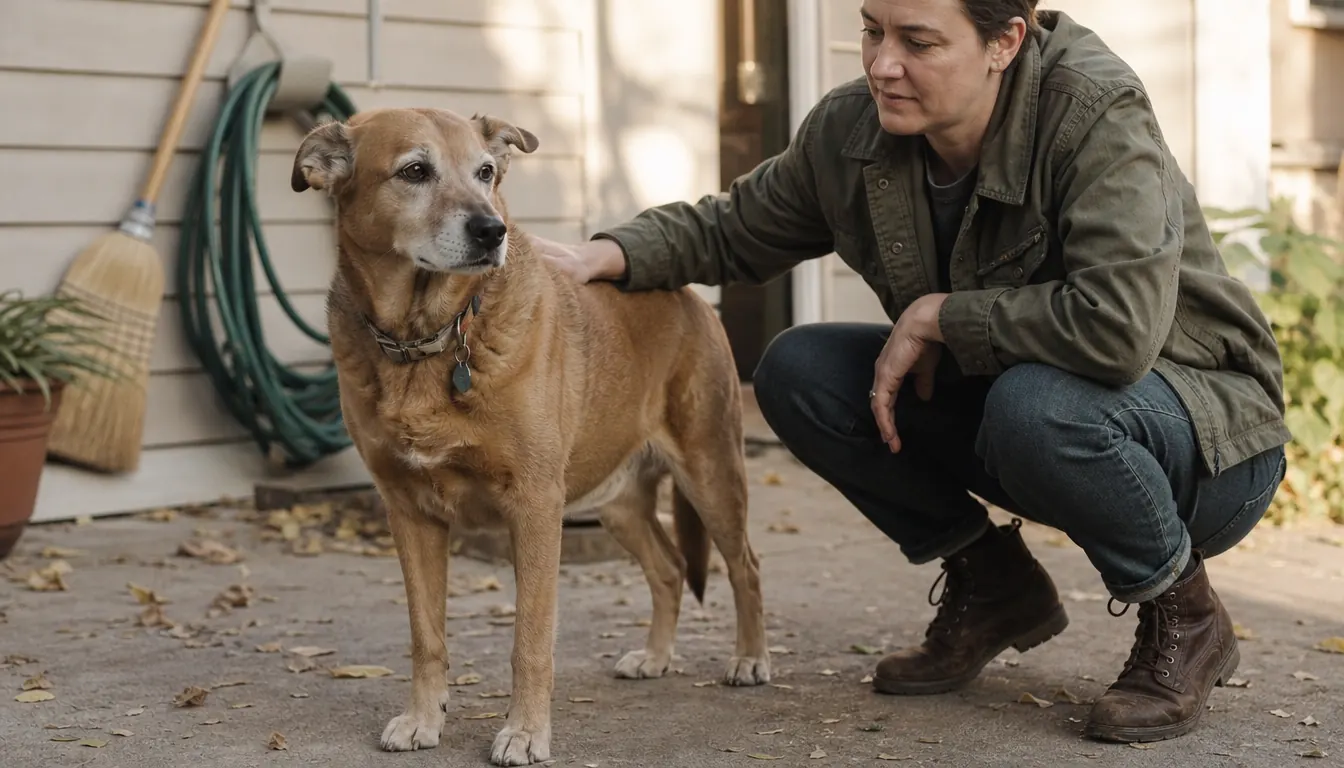
Murphy is a 6-year-old beagle mix, about 28 pounds, tan and white with a black saddle, and he sheds the way the tide comes in. Steady, all year, no season off. I have vacuumed the same square of living room rug three times in one week and watched it fill up again. I am not exaggerating. Frank will back me up on this and Frank does not back me up on much.
For a long time I figured I was doing something wrong. I had an old rubber grooming mitt that I used on him out on the back patio, and it felt like it was working, because my hand was moving and he was enjoying it and there was hair on the concrete afterward. But it was a thin little halo of hair. Two days later the couch looked exactly the same as always. The mitt moved hair around. It did not get much of it off the dog.
In August 2026 I bought the FURminator Medium deShedding Tool for short hair. Three months in, it is the only thing that has made a visible dent. Not a cure. He is a beagle mix, he still sheds, and I would be lying if I told you otherwise. But the hair on the couch cushions and on the back seat of my SUV is maybe half of what it was in July, and around here, half is a win.
The First Thing That Put Hair on the Patio Instead of the Couch
The FURminator Medium deShedding Tool for short hair is sized for dogs from 25 to 50 pounds, which is Murphy at 28. It reaches through the topcoat for the loose undercoat hair, and a button releases what it collects. I use it twice a week for about ten minutes. That is the whole program.
Amazon Check Today's Price on Amazon →Step 1: Dry Coat, Willing Dog, Outside on the Patio
The first time I tried it, Murphy had been out in the yard after a light rain and his coat was still damp. The tool skipped and dragged and he turned around and gave me a look like I had lost my mind. I toweled him off, set the tool down, and waited about an hour and a half until he was dry to the touch down at the skin. The second attempt on that dry coat went through like a comb through warm butter. Dry coat, dry tool. That is the whole rule. He got soaked on a damp October morning a few weeks back and I made the same mistake again and got the same skipping, so it is not a one-off. If he needs a bath, do the bath first and let him dry all the way through, or just groom him the next day. Damp fur fights the tool and the dog fights you.
The other half of step one is getting him to stand still, and I am not above bribery. I put a plate with a smear of peanut butter on it on the patio table and he stands there for ten minutes without noticing what my hands are doing. If your dog is a wriggler, do five minutes and quit. There is no prize for finishing in one sitting, and a dog that learns to dread the tool is a dog you will stop grooming by the end of September.
And do it outside. I groom on the back patio, not in the house. Hair lands on concrete where a broom gets it in four seconds. Hair that lands on the carpet upstairs disappears down into the pile and lives there until the next time Frank drags the vacuum up the stairs, which is not as often as I would like.
Step 2: Follow the Coat, Light Pressure, No Pressing
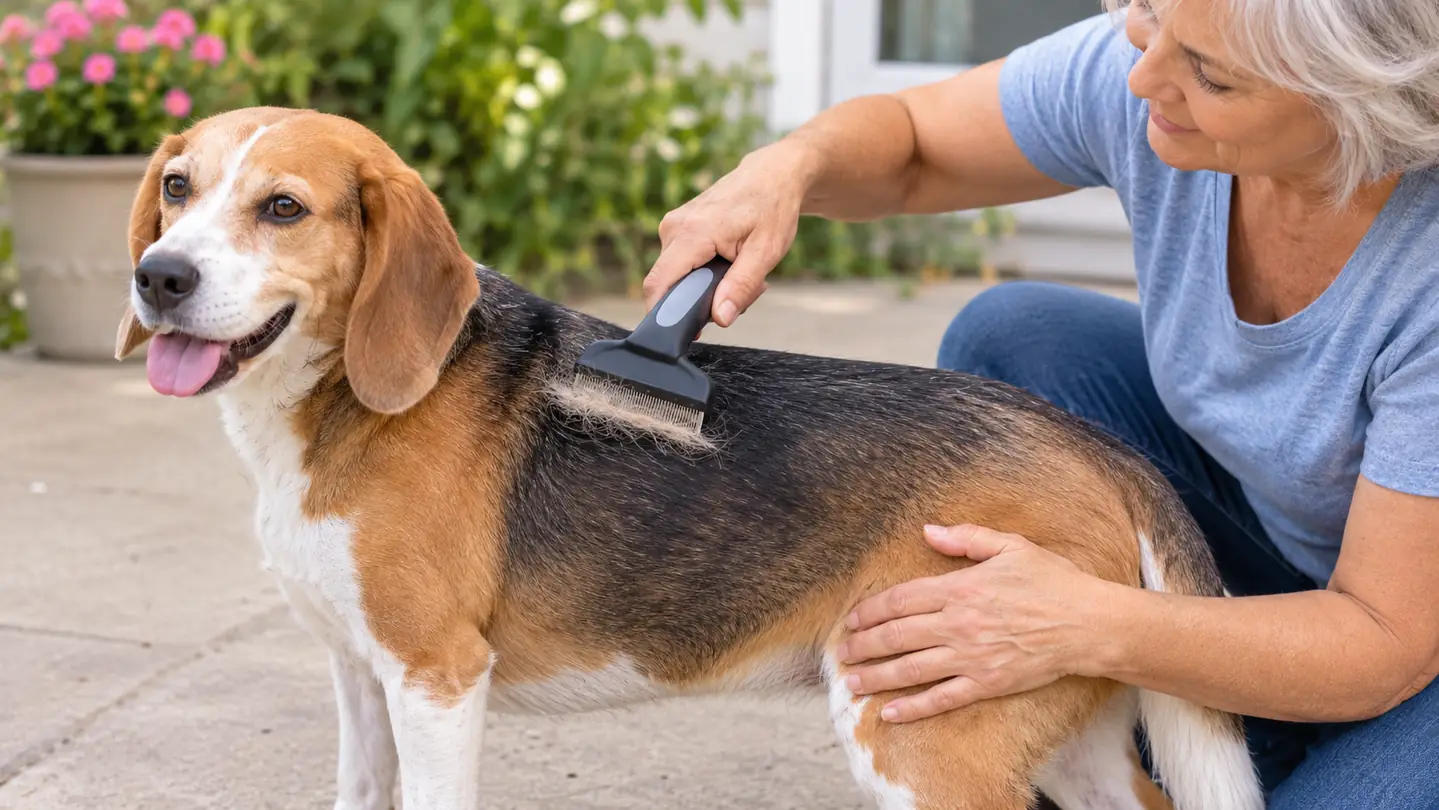
The directions say to use it in the direction of the coat, and I can tell you from three months of Tuesdays that it matters. Long, light passes along his back, from the shoulders toward the tail. The tool reaches down through the topcoat for the loose undercoat hair without cutting the skin or wrecking the topcoat, and it does exactly that when you let it do the work instead of leaning on it.
I do not press. My first week I got a little enthusiastic on his hindquarters and he stepped away from me, and when I parted the fur the skin underneath was pink. Nothing dramatic, but I eased off and I have not done it since. Light pressure, plenty of passes, and skip any spot where the skin already looks angry. If your dog has a rash, a hot spot, or a patch that he will not let you touch, that is a question for our vet and not a grooming project.
Legs and chest get a lighter hand and fewer passes. The back and the rump are where Murphy carries the loose stuff, so that is where most of my ten minutes goes. You will find your own dog's spots fast enough. Watch where the hair piles up on the tool and go back there.
Step 3: Ten Minutes, Twice a Week, and Quit While It's Working
Tuesday and Saturday, roughly. Ten minutes each. That is the schedule in this house and it has held for three months, which is longer than any grooming routine I have ever managed. Twice a week has been enough to keep the couch from looking like a dog bed.
The temptation is to keep going until nothing else comes off. That is a mistake. There is a point where the tool starts gliding instead of catching, and that is your signal to put it down. I made that mistake on his left flank in the second week and he simply sat down, which for Murphy is the polite version of leaving the room. Now I count passes on a patch, five or six, and move on. If I come back around later and the tool catches again, fine. If it glides, we are done in that spot and I do not argue with it.
Consistency beats duration. I would rather do ten minutes twice a week for three months than a forty-minute marathon once and then not touch it again, because that is exactly what happened with the rubber mitt. It went into the drawer and stayed there. The difference this time is that ten minutes is short enough that I actually do it.
Three months in, the couch cushions and the back seat of my SUV hold maybe half the hair they used to. He still sheds. I just stopped living in it.
Step 4: Hit the Button and Clear It as You Go
There is a button on the tool, and pushing it releases the hair that has collected. I hit it every few passes, over the concrete, and the clump drops straight down. If you wait until the end, the tool loads up, stops catching, and you spend ten minutes dragging a full tool around a dog who has decided he has had enough. The first month I kept an empty plastic bag clipped to the patio table and dropped the clumps into it, which kept the concrete from turning into a fur drift. Now I just let it fall and sweep at the end, because it is a patio and a broom takes care of it in under a minute.
The hair that comes off is a soft, pale fuzz, nothing like the coarser top hairs, and that is how I know it is getting the undercoat and not just tidying the surface. That was the thing that convinced me this was different from the mitt. The mitt left the good hair on the dog and shoved it sideways. This pulls the fuzz out and leaves the coat looking normal.
The FURminator is 7.2 ounces, about 2 by 5 by 8.75 inches, and it lives in the drawer by the back door with the broom and the lint roller. That location matters more than it should. A grooming tool in the garage is a grooming tool I never walk out to. The edge still catches the way it did in August, and all I do is knock the hair out and put it back.
Step 5: Build the Rest of the House Into the Routine
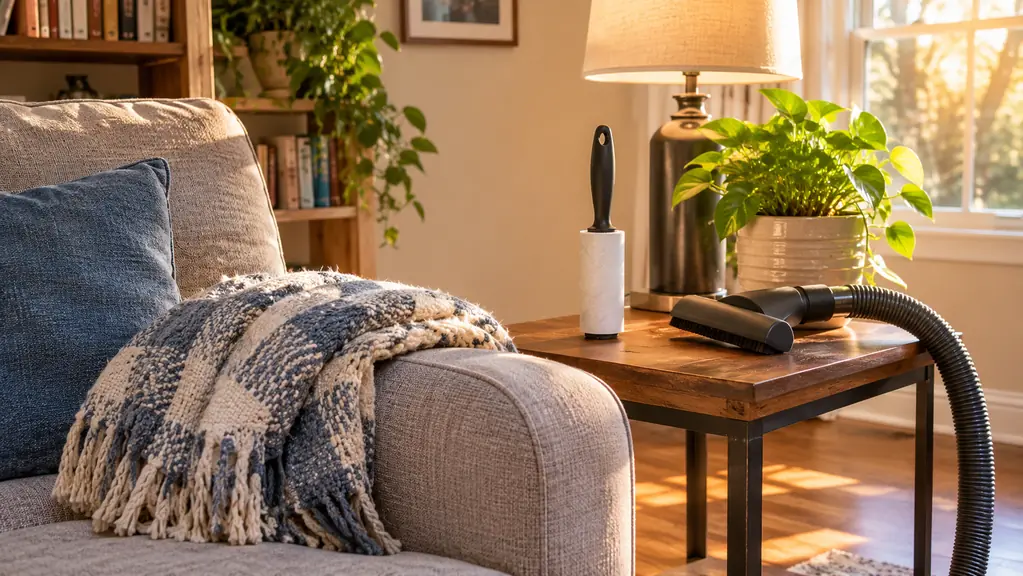
Grooming handles the dog. It does not handle the hair that is already on the couch and in the car, because that hair does not get up and leave on its own. So the same week I started with the tool, I changed the rest of the routine around it. The throw blanket on the couch gets washed on Sundays. The back seat of the SUV gets a vacuum and a lint roller every couple of weeks. The upstairs carpet gets a pass with the vacuum on the same Tuesday I groom him, so it is one job in my head instead of two.
None of it is glamorous. It is the difference between a house where a dog lives and a house where something exploded. Frank's job is the vacuum. He does not love it, but he also does not love finding hair in his coffee, so we have an understanding.
One more thing. Brush outside, empty outside, and do not shake the tool out over the rug. I know how that sounds. It took me two weeks to learn it anyway.
What Else Helps
The tool is the main event, but it is not the whole story. A few other things made a real difference in this house over the last three months.
A vacuum with a hose attachment, run on the same schedule as grooming. The hair comes back, so the vacuum has to come back too. Skipping a week does not ruin anything, but skipping a month means you are starting over.
Washing his bedding and that throw blanket on a regular basis. Fabric holds hair the way a sponge holds water, and then it hands that hair off to whatever touches it, including you, including your good coat, including the guest who sits down without thinking.
A cheap lint roller in the car. I use it more than any gadget I own and it costs less than lunch. Two minutes before I pull out of the driveway and the back seat looks respectable again. I keep one in the glove box and one in the kitchen drawer, and I have given up pretending that is excessive. The kitchen one gets run over the armchair before company comes. The car one gets run over the passenger seat, which is where Murphy rides whenever Frank stays home and the back seat stays empty.
What I would not do again is keep buying gadgets hoping one of them beats a ten-minute session with this tool. I already own the rubber mitt. It is in the closet now, and I know exactly what it does and does not do.
And I would say this plainly. If Murphy's coat changes, or he starts scratching more than usual, or the shedding goes from steady to dramatic in a way that seems off to me, that is a call to our vet. I am a retired school bus driver with a broom and a grooming tool. There is a difference between a dog that sheds and a dog with a skin problem, and our vet is the one who can tell you which one you are looking at.
Three Months, Twice a Week, and the Couch Looks Different
The FURminator Medium deShedding Tool for short hair, sized for dogs 25 to 50 pounds, with a button to release what it collects. It is the only shedding tool I have managed to use twice a week for three straight months, and around here that is the closest thing to a recommendation I know how to give.
Amazon Check Today's Price on Amazon →