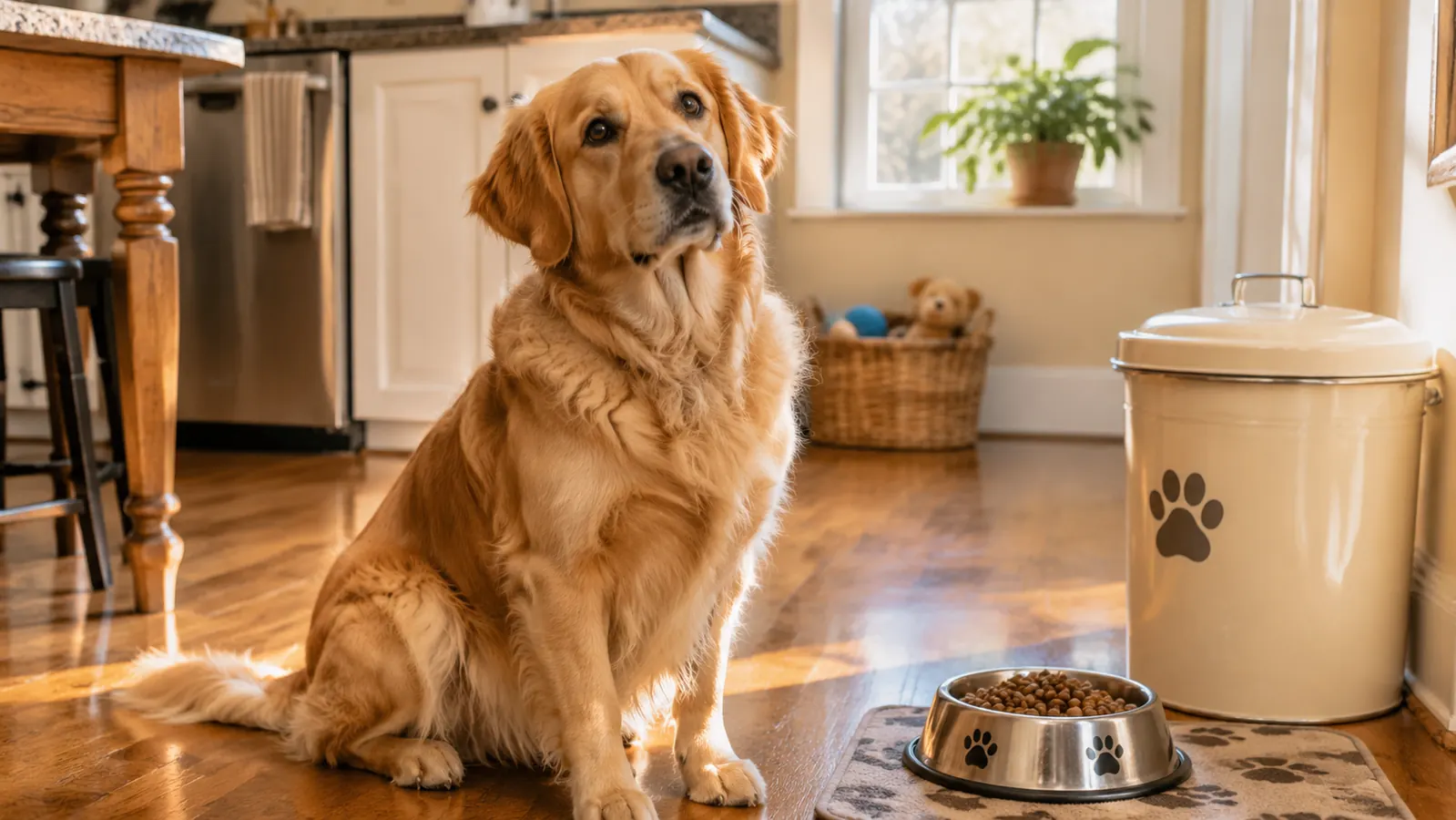
Murphy is a 28 pound beagle mix, and for the first four years I had him, dinner was the fastest thing he did all day. The kibble hit the bowl and it was gone before I got the scoop back in the bin. Forty seconds, maybe less. Then he would burp, sometimes cough, and look up at me like nobody had fed him in a week. He is six now and otherwise healthy. He just eats like the food is going to be taken away from him, which as far as he is concerned it might be.
I asked our vet about it at his checkup. Our vet said plenty of dogs who bolt their food swallow a lot of air along with it, and that a slow feeder was the simplest thing to try before we looked at anything else. So in September 2026 I bought the Outward Hound Fun Feeder Slo Bowl, the 11.8 inch one, in the Notch pattern. Two months later, every kibble meal Murphy eats goes into that bowl. Dinner takes him several minutes now instead of under one, and the burping afterward has mostly stopped. Here is how I would walk a neighbor through it, start to finish.
Forty seconds became several minutes with one change at the food bowl
The Outward Hound Fun Feeder Slo Bowl holds four cups and puts a deep maze between your dog and his dinner. Outward Hound says it can slow eating up to ten times. On Murphy it turned a forty second meal into one that takes several minutes, and he has eaten out of it twice a day since September.
Amazon Check Today's Price on Amazon →Step 1: Get a vet's opinion before you buy anything
I am not a trainer and I am not a vet, so this step is short. If your dog eats fast and then brings food back up, or gulps water, or has a belly that looks tight and swollen after a meal, that is a call to your vet, not a shopping trip. Murphy had been doing the burp and the occasional cough for a while. Our vet looked him over, said he was fine, and told me a slow feeder was worth trying. That is the only reason I felt comfortable buying one instead of lying awake worrying about it.
Eating fast is not always a medical problem either. A lot of dogs come out of a shelter or a big litter where they had to compete for the bowl, and the habit sticks long after the competition is gone. Murphy was two when I adopted him and he had been in the shelter a few weeks before that. Our vet thought that probably had something to do with it, and it made sense to me, because he is not a greedy dog about anything else. The appointment was a Tuesday in late August, the same visit where our vet weighed him at 28 pounds and said his teeth looked good. I wrote the whole thing down on the back of a receipt in the car, because at 63 I have learned not to trust myself to remember what a doctor tells me.
Once you have the all clear, the rest is just routine. The bowl does not do anything on its own. It only works if every meal goes into it and you leave the dog alone long enough to figure it out.
Step 2: Size the bowl to the meal, not to the dog's pride
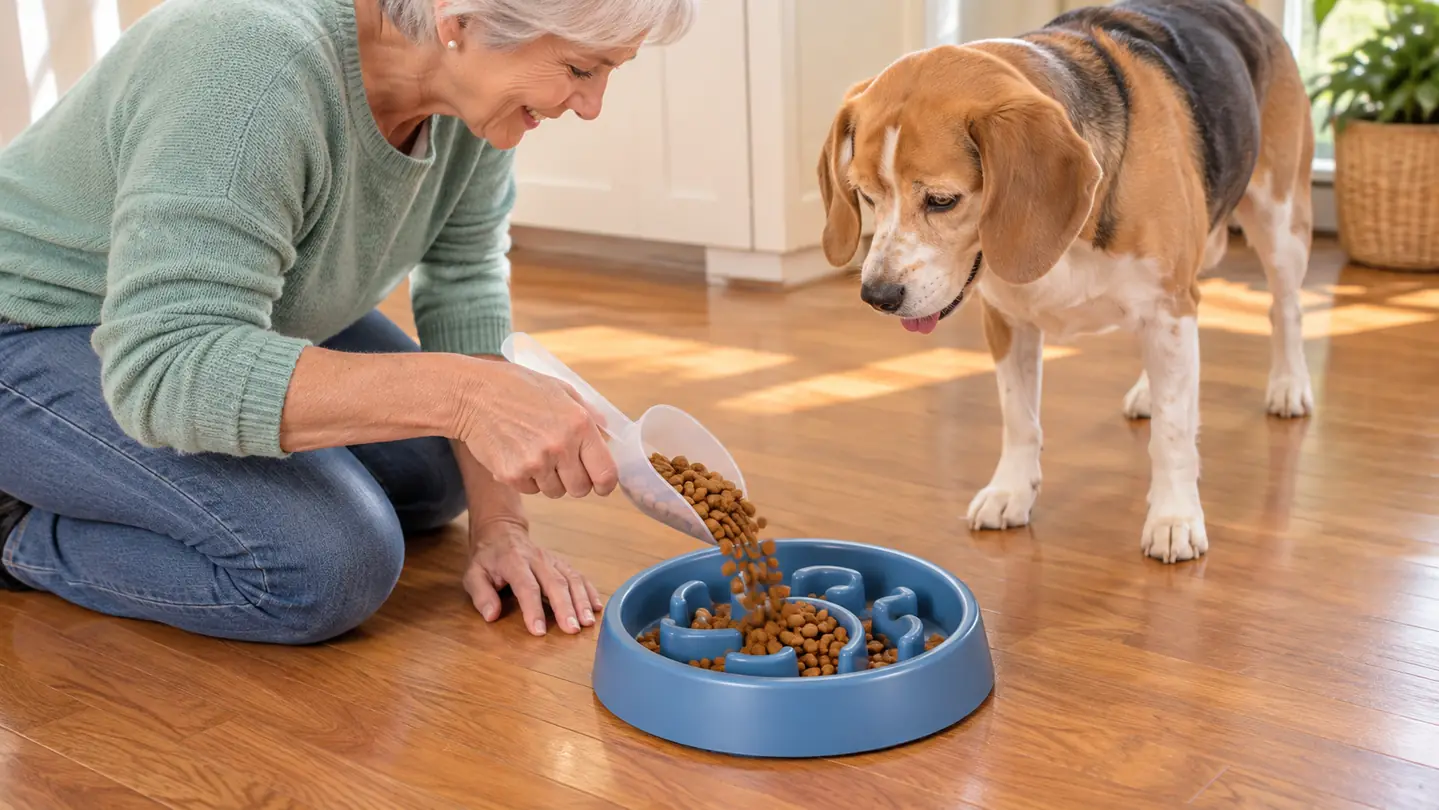
The Fun Feeder Slo Bowl I bought holds four cups and measures about 11.8 inches across and roughly two inches deep. That is a big bowl. Murphy's portion is nowhere near four cups and that is fine. The maze runs through the middle, and having room around the outer edge means the kibble spreads out instead of piling in one spot he can clear in three bites.
The listing puts this size in the large dog range and names boxers, bulldogs and chows. Murphy is 28 pounds and it works for him. The bowl is not so tall that he cannot reach in, and the depth means he has to take the food a few pieces at a time instead of scooping across the top. If you have a small dog, a smaller size makes more sense. If you have a genuinely large dog, this one at four cups will hold a real meal instead of making him chase a handful of kibble around the rim.
Measure the portion with the same scoop every time. I keep Murphy's scoop in the food bin and I level it off. Two months in, the bowl has not changed how much he eats. It has changed how long it takes. Before I bought anything, I tried the free versions first. I spread his kibble out across a cookie sheet one morning in September and he licked it clean in about ninety seconds, then pushed the sheet into the wall doing it. Then I tried a muffin tin. He got his tongue stuck down in the corners, gave up, and barked at me. The bowl is easier to wash than the tin was, and there are no corners for a tongue to get stuck in.
Step 3: Pick a maze level that actually slows your dog down
Outward Hound sells this bowl in three levels, Slow, Slower and Slowest, plus different patterns and sizes. The Notch bowl I have is the Slow level, and the listing says it is built for fast eaters. That was Murphy exactly. If your dog finishes even a mazed bowl in under two minutes, there is a Slower and a Slowest to move up to, and that is the whole reason the levels exist.
Do not start at the hardest one. A dog who has never had to work for a meal can get frustrated and walk away, and then you are back to the plain bowl out of guilt. Start at Slow, give it a week, and time one meal with your phone. If dinner is still over in a minute, move up a level.
The food settles into the low spots in the maze and Murphy has to work it out with his tongue and his nose. He goes around the outside first and then pushes into the middle. It took him about three days to stop nosing at the edges instead of eating. By the end of that first week I could hear the difference from the next room. The plain bowl made one quick metallic rattle and then silence. This one makes a slower, scratchier sound for several minutes, and I have gotten so used to it that the short version would worry me now.
The bowl did not change how much Murphy eats. It changed how long it takes, from under a minute to several.
Step 4: Set the first week up so the dog does not quit on you
Put the new bowl exactly where the old one was. Same corner, same floor, same two meal times, seven in the morning and five at night for Murphy. Dogs are conservative about mealtime, and moving the bowl across the kitchen makes it look like a completely different event.
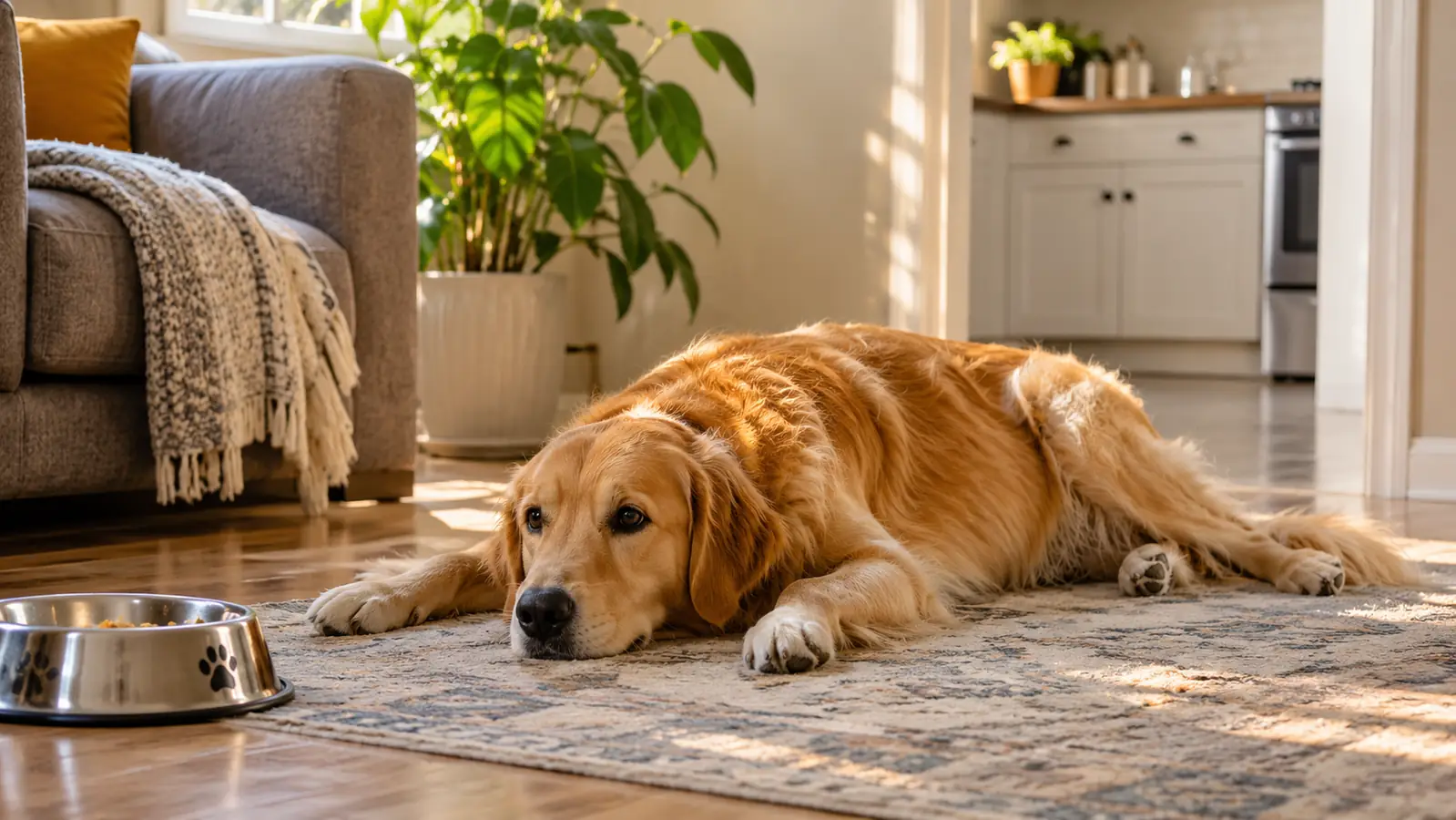
Stay in the room for the first few meals. Not to coach him, just to watch. Some dogs take to it in one meal. Some nose the ridges, back off, and come back. Murphy did a fair amount of huffing at me the first night. He got about half of it down and then sat and stared at the cabinet where the food bin lives. I picked the bowl up at the ten minute mark the way I had planned, and he spent the rest of the evening checking the floor where it had been. The next morning he went at it without a fuss. If your dog gives up and walks away, leave the bowl down for ten minutes and then pick it up. Do not top it with something better to bribe him, or you will teach him that refusing the bowl pays.
Keep the water in a separate plain bowl. This one is for food. Murphy drinks out of a plain bowl on the other side of the kitchen and always has. A dog should not have to solve anything to get a drink.
Step 5: Wash it every night and look it over once a week
I hand wash Murphy's bowl in the sink after dinner every night. Warm water, a dish brush, and a bottle brush for the channels, because kibble dust and saliva collect down in the grooves where a sponge will not reach. It takes about a minute. I do not put it in the dishwasher given the shape of it, and I would not. It air dries upside down on the rack and it is ready by morning.
Once a week, look it over. The bowl weighs 13.76 ounces, so it is easy to pick up and turn over in your hands. Check the ridges for cracks or rough spots where a nail could catch, and check the bottom. If it has gone chalky or split, replace it. A cracked bowl is not worth saving.
This is also the moment I check how much he is actually eating. A slow feeder makes the meal visible. Twice now I have noticed a few pieces left behind, which never happened with the plain bowl because there was nothing to see.
What Else Helps
The bowl is most of it, but a few other things made the change stick. Murphy eats in a quiet corner of the kitchen, away from the back door and away from the path Frank walks when he comes in from the yard. We moved him from beside the back door to the corner by the pantry in the second week, and it made a bigger difference than I expected. Frank comes in from the yard around five most afternoons in the fall, right at mealtime, and that first week Murphy was up and down out of the bowl like a dog with a job. On the plain bowl, noise did not matter, because he was done before anything could distract him. Now that dinner takes several minutes, a door banging shut can pull him off the bowl and he has to come back to it.
Fixed meal times do as much as the bowl does. Murphy eats at seven and five and always has. Leaving a bowl down all day undoes the whole thing for two reasons. There is nothing to slow down if he grazes, and you have no idea how much he is actually eating.
And if your dog is vomiting after meals, losing weight, or just seems uncomfortable, that is a vet question, not a bowl question. A slow feeder is a good habit, not a treatment. Our vet is the one who told me that, and I have repeated it to two neighbors already.
Two Things I Got Wrong the First Week
I almost gave up on day three. Murphy was huffing and pushing the bowl around the floor and I decided it was cruel and he hated it. What he actually hated was me standing over him with my arms folded, watching every bite. I went and sat on the couch, he finished his dinner in about four minutes, and that was the end of the drama.
The other thing was that I kept checking on him. Every thirty seconds I was up out of the chair to see whether he was getting any food at all. He was. It just took longer than I was used to. Now I set the bowl down and leave the room, and the only thing I time is how long the kitchen stays quiet.
A slow feeder is a good habit, not a treatment. If your dog is bringing food back up, that is a call to your vet.
Two months in, Murphy still eats out of the same bowl twice a day
Every kibble meal goes into the Outward Hound Fun Feeder Slo Bowl, and dinner takes several minutes instead of forty seconds. It holds four cups, comes in three levels so you can move up if your dog is quicker than mine, and hand washes in about a minute. Worth a try after a vet check.
Amazon Check Today's Price on Amazon →